Context Engineering: The Next Step in Agentic Design

Alex Barnett
CEO
Insight

Most AI agents fail not because of poor instructions, but because they lack the right information at the right time.
While prompt engineering focuses on writing better instructions, context engineering tackles a different problem: building systems that empower AI agents with the information they need to succeed. This shift from static prompts to smart information delivery is changing how we build reliable AI systems.
Understanding Context Engineering
Context engineering means building systems that give AI agents the right information when they need it. Unlike prompt engineering (writing better instructions), context engineering makes sure agents have access to the knowledge base and tools required to follow those instructions.
Think of it like this:
Prompt engineering is giving someone detailed driving directions. Context engineering is providing a GPS, real-time traffic updates, and local knowledge when they hit the road.
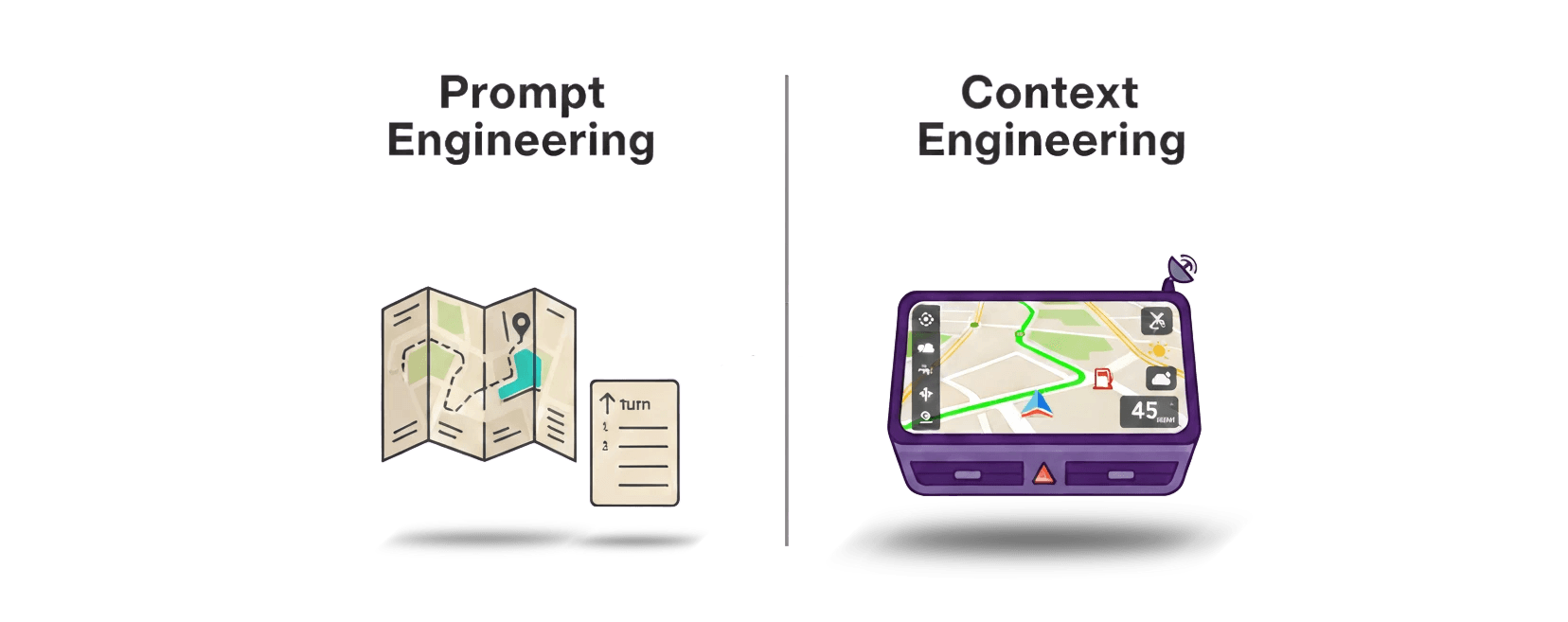
The key insight: AI agents need both clear instructions and powerful tools to achieve their goals.
When AI Agents Fail: The Context Question
When an AI agent can't complete a task, the most useful question isn't "What went wrong?" but "What information or tools did it need to succeed?"
This changes how we think about fixing problems. Instead of tweaking instructions, we focus on improving information flow. Most agent failures happen because of missing pieces:
Missing knowledge: The agent doesn't know enough about your business or your customers to make good decisions.
Bad tools: The agent can't access the systems or data it needs to take action.
Poor formatting: The information exists but isn't organized in a way the agent can search, understand, or use.
In other words - you can't predict every piece of information an agent might need. But you can build systems that gather and provide context as situations develop.
Context Engineering vs. Prompt Engineering
Prompt engineering = crafting clear instructions for common scenarios
Context engineering = building dynamic information ecosystems
The difference?
Prompt engineering is ideal for single interactions. Context engineering builds systems that can adapt, learn, and improve with every conversation.
How Context Engineering Works in Practice
Context engineering uses four main ideas in harmony: remember, gather, filter, and contextualize. Each principle solves different problems in getting agents the right information at the right time.

Remember: Smart Memory Systems
AI agents work better when they can remember things. They need short-term memory (like taking notes during a conversation) and long-term memory (remembering what worked in similar situations before). Popular AI tools like ChatGPT and Cursor now automatically create these memories from your interactions, making them smarter over time.
Gather: Dynamic Information
The difference between a "cheap demo" and a "magical" agent isn't the complexity of code—it's the quality of context provided. When someone emails "Hey, can we sync tomorrow?", a basic AI responds generically. A well-designed system pulls your calendar, recent conversations, project status, and communication patterns to respond intelligently.
Filter: Multi-Source Retrieval
Modern AI agents don't just read your prompts. They actively search hundreds of sources, pull from your Google Drive, connect to databases, and combine information from places you never directly gave them. Your carefully written prompt becomes just a tiny fraction of what the agent actually processes.
Contextualize: Business Context
Every company has written and unwritten rules for how to make choices. If an AI breaks these rules, at best it's not helpful - at worst it’s a liability. These rules are the "do's and don'ts" of any company, and ensuring your team (AI and human alike) understands these rules, provides a foundation for decision making.
The real challenge isn't building smarter AI models. It's building systems that provide relevant, timely information without overwhelming the AI or slowing it down.
Context Engineering in Customer Support
Customer support is one of the best examples of where context engineering makes a huge difference. Support environments are incredibly information-rich, making them perfect for testing these ideas.
The Information Challenge: Support agents need access to customer history, product knowledge, company procedures, escalation processes, and real-time system status. Traditional systems make human agents hunt through multiple screens while customers wait. Good context engineering delivers this information automatically.
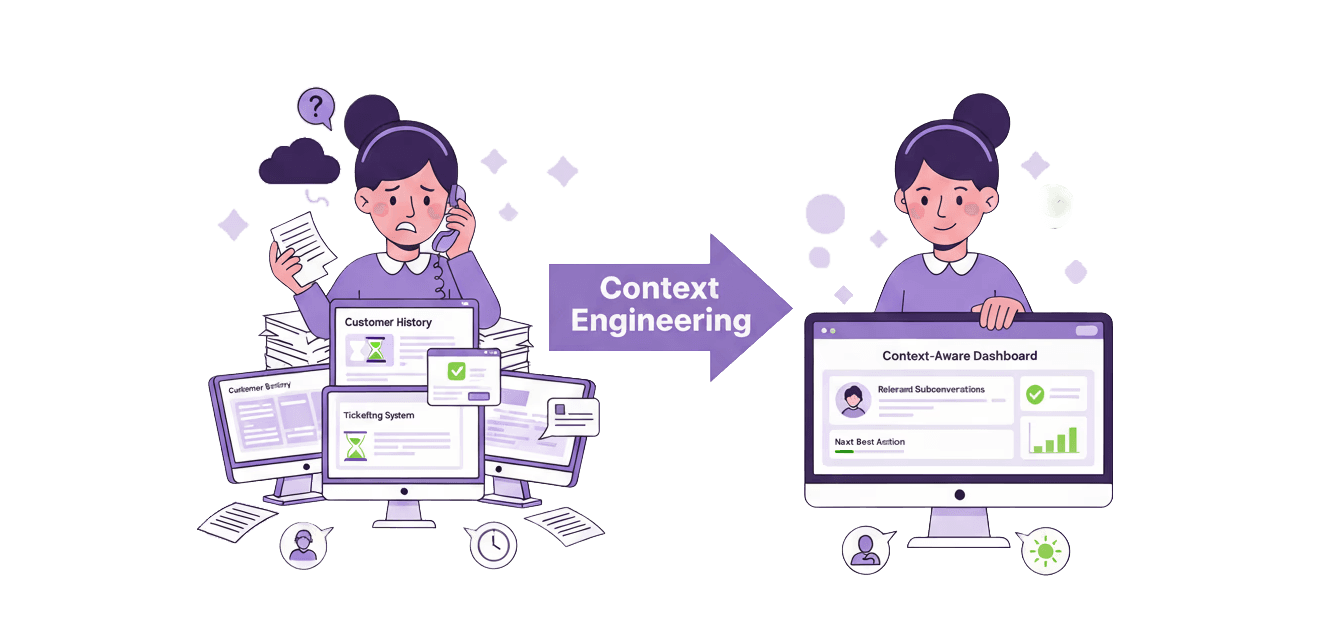
Dynamic Knowledge Systems: Instead of static FAQ databases, context-aware support tools combine customer data, past interaction patterns, product usage information, and current issue trends. This gives both human and AI agents relevant information before they have to ask for it. The shift is from reactive searching to proactive intelligence.
Organizational Learning: Context engineering captures the knowledge that experienced agents develop over time—not just written procedures, but the subtle understanding of which solutions work in specific situations. This includes recognizing customer behavior patterns, knowing which approaches work best, and understanding when to escalate based on early warning signs.
Getting Smarter Over Time: Well-designed context systems learn from successful resolutions and suggest better approaches for similar future cases. The system becomes more intelligent through use rather than staying static.
This isn't just about automation—it's about giving human agents better information so they can make better decisions and solve problems faster.
Why Context Engineering Matters Now
The future of AI success isn't about more powerful models—it's about better information systems. As AI models become more common and affordable, the competitive advantage goes to organizations that can provide the right context at the right time.
The Technical Reality: When context systems fail, problems multiply quickly. One missing piece of information leads to poor decisions, frustrated users, and system breakdowns that need manual fixes. Building reliable AI means treating context as a core engineering priority, not something you add later.
The Business Opportunity: Organizations that master context engineering will build AI systems that truly understand their business, adapt to changing conditions, and get better through use. Those that don't will end up with fragile automations that break often and need constant fixes.
What This Means for Leaders: Whether you're building AI products or using AI in your organization, focus on information architecture as well as prompt writing. Invest time in understanding how information flows in your business, design memory systems, and create feedback loops that improve context over time.
The companies succeeding with AI aren't using better models—they're using better context engineering. The difference between reactive tools and smart, proactive systems isn't smarter algorithms, but smarter information management.
Context engineering is how you build that intelligence.



