Customer Support Data: Your Hidden Product Feedback Loop

Alex Barnett
CEO
Insight
Customer Support Data: Your Hidden Product Feedback Loop
My Chief Product Officer once asked me something I couldn't answer: "Alex, if we invest engineering resources in building a chatbot to solve 20% of support issues, why wouldn't we just fix those issues in the product instead?"
I left the company before I could give him a satisfying response. It took me years—and a lot of customer support data—to figure out why.
Why the Question Stuck With Me
It was a genuinely brilliant question. The logic was airtight: if customers are contacting support about billing confusion, fix the billing interface. If they can't find a feature, improve the navigation. Why automate the band-aid when you could prevent the wound?
I didn't have a good answer. And for years, that bothered me.
The thing is, he was right about the underlying principle. Solving problems upstream is always better than handling them downstream. But the question implied something I couldn't articulate at the time: that products reach a "fixed" state where customer friction can be eliminated entirely.
But they don't. Products are always changing.
Every feature launch, every UI update, every copy change generates support contacts. Sometimes it's because people love change. More often, it's because something broke in ways nobody anticipated. This is why teams A/B test, ramp rollouts gradually, and talk about "limiting blast radius."
The friction is unavoidable. The question is what you do with it.
What I Should Have Said About Chatbots
The obvious answers came to me later. Chatbots solve operational problems that product fixes can't touch:
Instant scaling. When a feature launches and contact volume spikes 300%, you can't hire and train agents in an afternoon. A chatbot absorbs that surge immediately.
Outage coverage. When systems go down at 2am, customers still need acknowledgement and workarounds. Bots don't sleep.
Baseline quality. A well-built AI provides consistent, accurate responses every time. No bad days, no knowledge gaps, no varying skill levels across your team.
The stopgap problem. Sometimes you know a feature is rough but the fix is three sprints away. Support—human or automated—bridges that gap so customers don't churn while you build version 2.
Operational sanity. No forecasting models, holiday coverage debates, on-call rotations, or capacity planning. The bot just runs.
But these are table-stakes arguments. They justify having support. They don't answer why you'd invest in scaling it when you could invest in eliminating the need for it.
The real answer came later, when I started paying attention to what customer support data was actually revealing—not just for customers, but for the company.
Support Intelligence: More Than Absorption
Here's what I missed in that conversation with my CPO: customer support is your front line for product intelligence.
Every ticket is a data point. Every conversation reveals what customers actually experience versus what you assumed they'd experience. Support sees what people love, what confuses them, what makes them stay, what makes them leave—at the exact moment it's happening.
When you frame support as purely absorbing friction, you miss half the picture. Yes, it keeps customers from churning while product iterates. But support ticket analysis also tells product where to iterate next.
The best support organizations don't just resolve issues. They quantify them, categorize them, and feed that signal back to product in a language product can act on. "Customers are frustrated" becomes "billing complaints rose 340% this week, concentrated in users who enrolled after the pricing change, with average sentiment scores three standard deviations below normal."
That's not a complaint. That's a priority.
The Product Feedback Loop I Discovered
After four years tracking contact rates at a 500-person support department, I noticed an annual pattern. Every year I brought it up, people dismissed it as noise—economic factors, seasonality, weather.
Then I moved to the product team and saw what was actually driving it:
Q1: New feature experimentation. Lots of testing, lots of launches, contact rates climbing as users hit unfamiliar flows.
Q2: Pruning. Kill what didn't work, double down on what did. Friction from the experiments lingers.
Q3: Growth push. Scale what's working, hit revenue targets. Support absorbs the volume.
Q4: Cost optimization before annual reporting. Product prioritizes contact rate optimization. The friction backlog finally gets addressed.
Then the cycle repeats.
We eventually confirmed it with data: contact rates correlated strongly with the number of active experiments a user was enrolled in. Not because the experiments were bad—because change creates friction. Always.
The Pattern That's Invisible Without the Right Tools
Here's the challenge: most companies believe they can squash bugs early and ship clean. And early on, they often can. Issues are obvious, volume is manageable, and a skilled support lead can eyeball trends.
But at scale, something different happens. Dozens of small friction points, each individually "acceptable", accumulate into a subtle, insidious drag on customer satisfaction. No single issue looks urgent. But collectively, they're eroding trust.
The problem isn't that people ignore these patterns. It's that they genuinely can't see them. Manual ticket review doesn't scale. Sampling introduces blind spots. By the time something becomes obvious, it's been hurting customers for weeks.
This is why we built Make Data Speak Human. The platform analyzes every conversation in real time—categorizing issues, detecting emerging trends, running QA, and surfacing what matters before it becomes a crisis. The goal isn't to replace human judgment, it's to give support and product teams the signal they need to act faster.
What the Best Teams Actually Do
The companies that get this right treat support as an investment in velocity and retention—not a cost to eliminate.
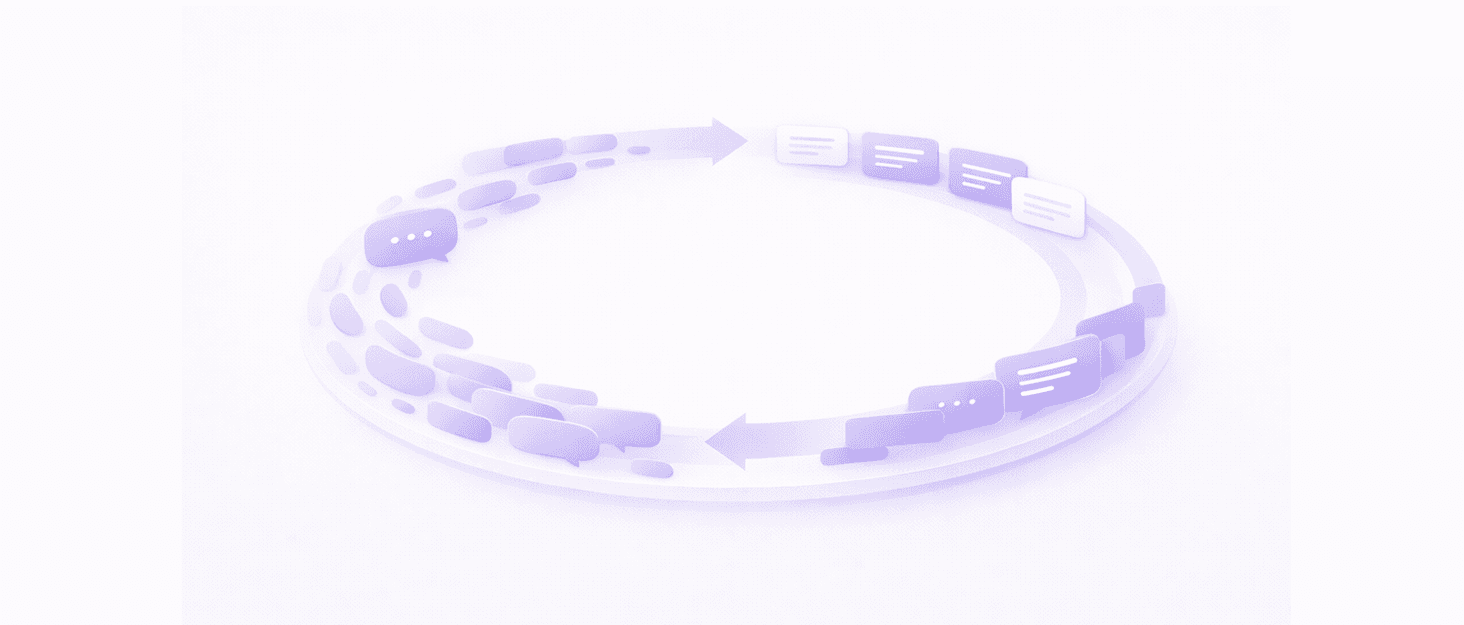
Their product feedback loop looks like this:
Ship changes knowing they'll create some friction
Support absorbs that friction and keeps customers from churning
Customer support data—analyzed continuously—reveals where friction hurts most
Product prioritizes the highest-impact fixes
Contact rates drop for those specific issues
Ship the next round of changes
The goal isn't zero support volume, It's faster iteration with less customer pain. Support and product working the same problem from different angles.
For more on how leading teams build this kind of support intelligence capability, explore our latest insights on the blog.
The Answer I Owe My Former CPO
You don't choose between fixing the product and building the chatbot. You do both—and you use the data from both to get smarter about where to invest next.
The chatbot handles today's friction instantly, consistently, at any scale. Product fixes reduce tomorrow's friction based on what customer support data is revealing right now. And if you're capturing that learning systematically, you're not just reacting to problems. You're predicting them.
That's the answer I wish I'd had. It took building Make Data Speak Human to figure it out.
Ready to turn your support conversations into product intelligence?
Schedule a Demo to see how Make Data Speak Human can help.



